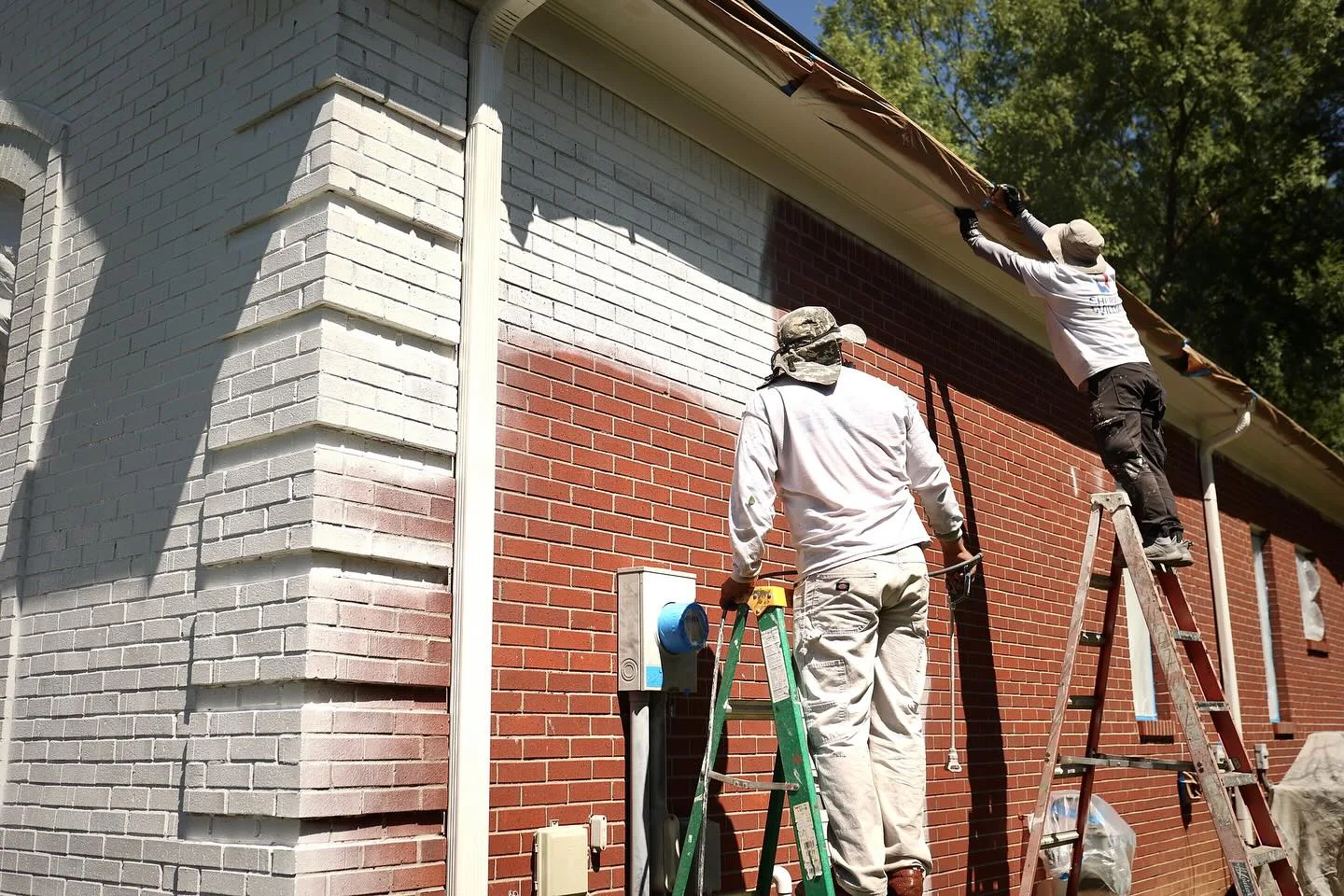
Yes, you can use interior paint outside, but most experts warn against it because it is built for indoor comfort, not constant outdoor stress. You might still try it because there is leftover paint on the shelf. The real problem is weather stress like UV radiation, moisture, and temperature swings that break down pigments and binders, cut mildew resistance, and make VOCs a side note. In Louisville, Alarcon Pro Painting sees this mistake a lot.
Below are the key points to help you choose the correct paint.
When It Might Work (But Barely) With Interior Paint Outdoors
There are a few rare pinch scenarios where interior paint outdoors can look okay for a short time. This only works when the item stays covered and dry, like a one-day event display under a porch.
- Convenience when the can is already open
- Color match when a quick touch-up needs the exact shade
- Low odor because many interior formulas target low VOCs for indoor safety
- Quick dry time in mild air, especially with acrylic-latex
- Lower cost today, even though the benefit is short-lived
A sealing primer and later overcoating trim can slow the damage, but it does not turn an interior product into an exterior one.
Five Reasons Indoor Paint Fails Outdoors
Interior paints are formulated to resist daily wear and tear in controlled environments. Exterior paints are specially formulated to withstand harsh weather conditions, and they are tested against a wide range of weather conditions, including high winds and extreme temperatures. When the wrong coating goes outside, field data from repaint calls shows fast failure.
- UV Fading Happens Quickly. Interior paint lacks UV protection and will fade quickly under direct sunlight. Interior paint pigments are not designed to withstand sunlight, resulting in rapid discoloration, and organic pigments can fade even faster on sun-baked walls. Exterior paint is formulated to resist fading from intense UV rays, and exterior paints contain additives that provide resistance to cracking and fading from UV exposure.
- Moisture Triggers Blisters And Peeling. Interior paint is generally more porous and less water-resistant than exterior paint, which can trap moisture and lead to damage. High humidity levels can lead to blisters and peeling, and interior paint lacks the ability to repel moisture, leading to peeling and mildew. Interior paint is not formulated to handle rain, snow, or humidity, so mildew and water damage show up sooner than you expect.
- Adhesion Breaks Down On Outdoor Materials. Proper surface preparation is vital when using interior paint outdoors. Cleaning the area thoroughly and removing any dirt or loose paint is essential before painting. Sanding the surface can help the paint hold and adhere better, and using a primer on porous surfaces like wood is recommended for a stronger bond.
- Temperature Swings Crack Rigid Coatings. Exterior paint allows for the expansion and contraction of materials, while interior paint is too rigid, causing it to crack. Exterior paint uses softer, flexible resins that expand and contract with temperature changes to prevent cracking, while interior paint uses harder, more rigid resins. Extreme temperatures fluctuations can cause the film to crack, peel, or fade.
- Missing Additives Lead To Short Lifespan. Interior paints lack the additives necessary to protect against UV light and extreme temperatures, and they often lack weather resistance. Using interior paint outdoors can lead to premature failure, including cracking and peeling, and it will likely fail within one or two seasons. Many crews see quick failure within a year.
Interior paint is typically less expensive than outdoor paint because they do not require the same level of durability. That price gap does not cover the redo. Using paint designed for interior use outdoors can void the paint’s warranty, so yes, it can make that much difference.
Better Exterior Paint Options That Last
If you want a finish that stands up to your outdoor paint projects, choose a product made for it. Exterior paint features flexible resins, UV resistance, and mildewcides to withstand moisture, sun, and temperature swings. Exterior paint is also formulated to resist mildew growth from moisture and degradation from rain or wind.
100 % Acrylic Exterior With Sherwin Williams
- Lifespan is often 7 to 15 years
- Finish options range from flat to satin, plus trim sheens
- Best for most siding types
Elastomeric Coating For Exterior Surfaces
- Lifespan is often 10 years or more on stable walls
- Finish is thick and low sheen for crack hiding
- Best for stucco, block, and masonry
Masonry or Stucco Paint For Exterior Use
- Lifespan is often 7 to 12 years when the wall can breathe
- Finish is usually matte with better chalk control
- Best for brick, concrete, and stucco
- Price is midrange
Deck and Fence Stain For Exterior
- Lifespan is often 2 to 6 years based on the sun and wear
- Finish runs from transparent to solid for different looks
- Best for decks and fences
- Price varies by opacity
Urethane-Fortified Enamel For Trim And Doors
- Lifespan is often 7 to 10 years with solid prep
- Finish is smooth and hard for high-touch spots
- Best for doors, trim, and railings
Professional Fixes For Interior Paint Outside
A pro starts by checking for peeling, chalking, mildew, and adhesion loss. Regular maintenance can prolong the life of your paint job when using interior paint outdoors, but you should watch for chipping or peeling after severe storms.
Most fixes follow the same steps. Power-wash, scrape and sand, apply bonding primer or premium exterior primer, then finish with a high-grade exterior topcoat. Using a sealant designed for exterior use can help protect interior paint when used outdoors, but it is usually a short-term bridge.
Curing windows matter. Aim for 50 to 85 °F with low humidity, and avoid direct sunlight or extreme temperatures during application so drying stays even. Full removal and the correct coating often costs less over time than repeated DIY touch-ups.
How Pros Prep And Seal A Painted Surface
Prep is what makes a job last. The painting contractors start with cleaning, repairs, moisture checks, and light sanding for grip. Cleaning the area thoroughly and removing any dirt or loose paint is essential before painting. Using a primer on porous surfaces like wood is recommended, and primer choice changes by substrate.
Pros pick stain-blocking primer for bleed-through, masonry sealer for porous walls, or bonding primer for slick areas. Applying interior paint in thin, even coats can help with coverage, but longevity depends on using the right system and taking the necessary precautions on the surface.
In Louisville, KY, and nearby areas, humidity and quick swings can shorten working time. Alarcon Pro Painting focuses on a simple, stress-free process, and the team is trained to treat your home with real care.
Cost, Time, And Paint Job Maintenance Comparison
Paints for interior walls are generally cheaper than exterior paints because they do not require the same level of durability and protection against environmental factors. The problem is the cycle. Using interior paint on outdoor surfaces often leads to quick failure, and crews commonly see repaint cycles run 3 to 5 times higher.
Add a cost-of-ownership table to your plan that lists materials, labor hours, and years of service. Using leftover interior paint saves money initially, but leads to long-term costs due to extensive scraping, sanding, and repainting with proper exterior paint.
Also consider warranties. Using the wrong house paint can void coverage, which pushes the full cost back on you. Premium exterior acrylic usually lowers lifetime cost because it cuts the redo loop.
Environmental And Health Considerations For Exterior Paint Inside
Interior paint is designed for durability against scuffs, stains, and washability in low-VOC formulas. Using interior paint for exterior applications can pose health risks due to the release of toxic fumes when the coating bakes in sun and reacts to the elements. Exterior coatings may have different VOC limits and additive packages, and regional rules can affect formulation.
Frequent scraping creates landfill waste, and chips can add microplastic runoff to storm drains. Choosing a longer-lasting system reduces those impacts because you strip and recoat less often.
Safer choices exist. Low-VOC exterior acrylics and recycled-content paints vetted by pros can lower odor while still performing outside. Hybrid products labeled for both interior and exterior use can save time and money by removing the need for separate products.
Ready For A Finish That Lasts For Outdoor Use?
Using interior paint for outdoor projects is strongly discouraged because it lacks the chemical properties needed to survive the elements. Interior paints lack the additives and binders necessary to withstand outdoor elements like rain, snow, and UV light, which is why cracking, fading, blistering, and peeling are so common.
If you want a finish that protects your home and your wallet, skip the redo and match the product to the surface and exposure. If you are still asking whether to use interior paint outside, treat it like a short-term patch, not a long-term plan.
For a no-obligation inspection in the Louisville area, book an estimate with Alarcon Pro Painting or request the exterior-paint checklist. You get clear prep, solid high paint quality, product matches, and a supportive team culture.