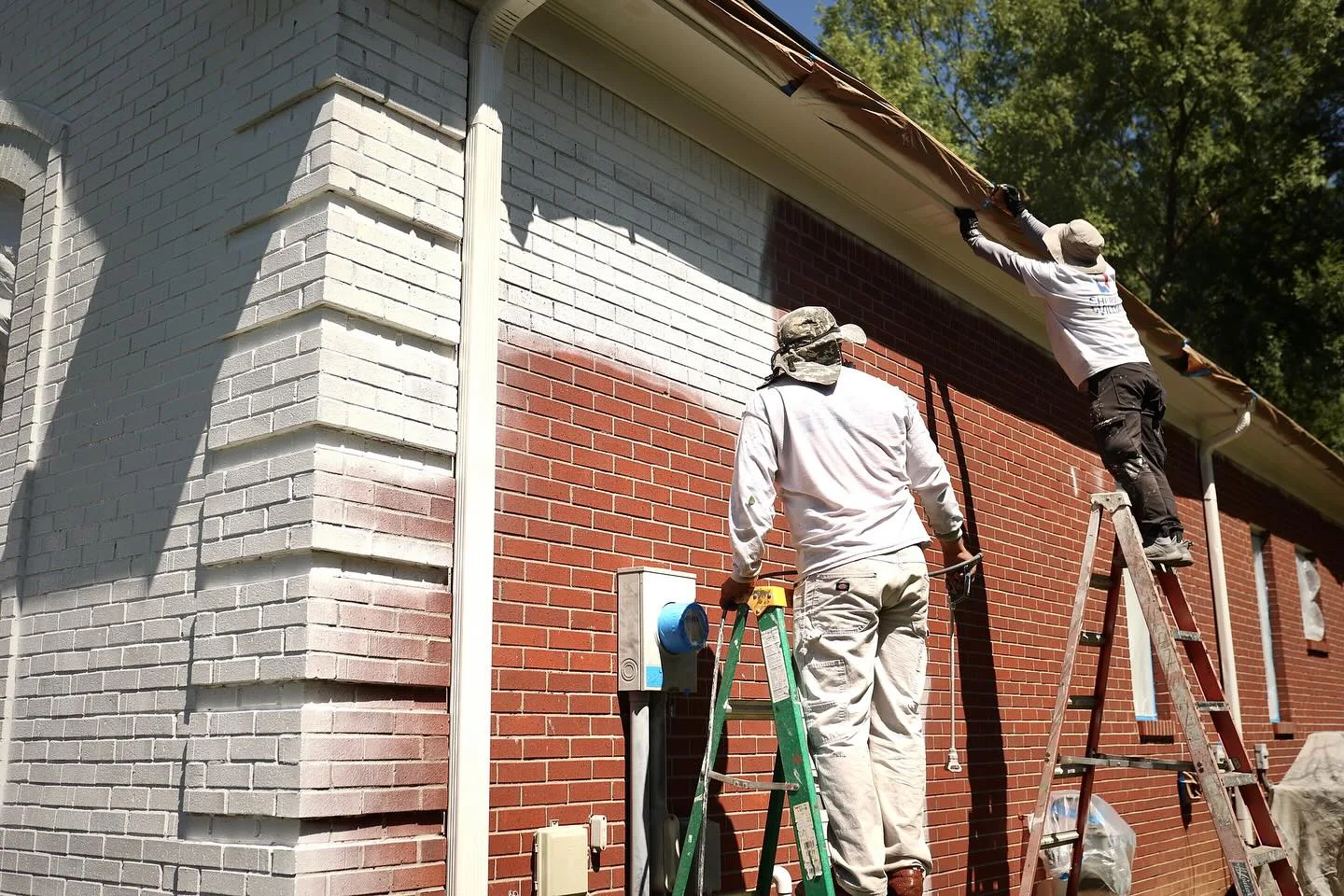

Red brick had a long run. For decades, it was the default look for homes across the country. But styles change, and plenty of homeowners now stare at their brick house and ask the same question: why paint brick at all?
Here’s the short answer. A painted brick exterior can turn a dated house into a fresh, modern one. It can brighten dark walls, lift curb appeal, and change how buyers see your home. Paint is also close to permanent on brick, so it pays to know what you’re getting into first.
“The payoff is real: a HomeLight survey of real estate agents found that fresh exterior paint improves a home’s resale value by over $7,500 on average – one of the strongest returns of any curb appeal project.”
Let’s walk through the five biggest reasons people decide to paint, plus what a brick painting project really involves.
[The five reasons homeowners paint their brick, summed up at a glance.]
Updates a dated 1970s–80s look in one move
Boosts curb appeal — and listing photo power
Light colors brighten dark, shaded walls
One uniform color hides mismatched or patched brick
The right product protects the brick and cuts maintenance
1. A Painted Brick Exterior Updates a Dated Look
Orange and red brick scream a certain era. If your two-story home went up in the 1970s or 1980s, the brick exterior may be the one thing that makes it look old. New roof? Fine. New windows? Great. The brick still gives away its age.
Paint fixes that in one move. A brick house painted white, greige, or charcoal reads as current. White painted brick in particular has taken off, from farmhouse styles to sleek modern designs. The texture stays. The dated color goes.
Few upgrades can match that. Swapping siding costs far more. Re-cladding in stone or other materials costs more still. Paint gives you a whole new look without touching the structure.
2. More Curb Appeal for Your Brick Home
Curb appeal is the whole picture: the roof, the landscaping, the front door, the shutters, the walkway. When the brick clashes with everything else, nothing you add can fix it.
A fresh coat changes the backdrop. Suddenly your black front door pops. Your garage door matches. The porch and brick steps look like part of one design instead of an afterthought.
“University research published in The Journal of Real Estate Finance and Economics found that homes with strong curb appeal sell for an average of 7% more than comparable homes – a premium that climbs to 10-11% in slower markets.”
— University of Texas at Arlington study, reported by Phys.org
Does it pay off? Many real estate agents say exterior paint delivers one of the better returns of any cosmetic project. A painted brick house photographs well, and listing photos are what pull buyers in for showings. A home that looks cared for from the street tends to invite stronger offers, too.
3. Light Paint Brightens Dark Brick Walls
Some brick homes sit in shade most of the day. Dark or busy brick makes them feel heavy and small. Light paint bounces sunlight instead of soaking it up.
A soft white or pale gray can make a shaded house feel open and warm. Inside, the same trick works on a brick fireplace that darkens a living room. Outside or in, light colors create contrast with trim and doors that unpainted brick can’t match.
4. Paint Covers Mismatched or Patched Existing Brick
Old houses collect scars. An addition built with brick that never quite matched. Mortar repairs in the wrong shade. Patches where a window or door once sat. Old paint someone rolled onto one wall decades ago.
You can’t un-mix mismatched masonry. You can cover it. One uniform color hides every patch and repair at once. For homeowners stuck with a patchwork of exterior brick, that alone settles it.
5. The Right Paint Protects Your Brick House Exterior
Here’s where you need to slow down. Brick is porous. It absorbs moisture, then releases it as it dries. The wrong product seals the brick surface shut, and trapped moisture has nowhere to go. The result is peeling, crumbling brick, and real potential damage.
“Let’s draw a hard line: if the can doesn’t say breathable masonry or mineral paint, it does not belong on a brick wall. Period. Saving $40 on the wrong product can cost you the wall itself.”
That’s why grabbing whatever is in the garage is a bad idea. Floor paint, leftover interior paint, bargain exterior paint — none of it belongs on brick. You want breathable masonry paint, or a mineral paint made for masonry surfaces. These let vapor escape while still shedding rain.
Done with proper materials, the paint job shields the brick and cuts long-term maintenance. Done wrong, it creates a mess that is extremely difficult to undo.
[What belongs on a brick wall – and what should never touch it.]
What a DIY Brick Painting Project Involves
Plenty of homeowners put painting brick house walls on the to do list and handle it themselves. Just know the work is front-loaded. Prep matters more than painting.
How to Apply Paint to Brick
- Clean. Pressure washing strips away dirt, mildew, and loose debris. Then let the wall dry out fully — rushing this step traps water.
- Repair. Fix cracked mortar and damaged brick before you apply paint.
- Prime. A masonry primer helps everything bond.
- Paint. Plan on two coats. The first coat soaks in. The second coat evens out the coverage.
[The four stages of a brick painting project, in the order they have to happen.]
Brick drinks paint, so buy more than you would for siding or other surfaces. Smaller jobs — brick steps, a porch wall, a concrete foundation — make good practice before you tackle a full brick house exterior.
If the house is tall, or the existing brick needs lots of repair, call a pro. The hard part isn’t rolling on color. It’s knowing the wall is ready for it.
Picking a White Paint Color: Benjamin Moore, Sherwin Williams, and More
White leads the pack, but “white” covers a lot of ground. A soft white like Benjamin Moore’s White Dove feels warm and classic. Alabaster from Sherwin Williams is another favorite for painted brick. Cooler whites read modern. Creamy whites suit traditional homes.
Test big swatches on your home’s brick before you commit. Sun, shade, and your roof color all change how a white paint color reads. A shade that looks crisp on a chip can look stark across an entire wall.
Is Getting Your Brick Painted Such a Permanent Decision?
Mostly, yes. Once you’ve got brick painted, stripping it back to bare, unpainted brick is costly and rarely perfect. A painted surface also needs a refresh every decade or so, which is upkeep raw brick never asked for.
Surprising fact
“Here’s what catches homeowners off guard: taking paint off brick typically costs several times more than putting it on – chemical stripping or blasting porous masonry is slow, specialized work, and even then the brick rarely comes back looking original. Pros call painted brick a one-way door for a reason.”
None of that means you should skip it. It means you should decide with clear eyes. If you love the look, use breathable products, and accept the upkeep, you’ll likely never miss the bare brick.
[A quick gut-check before committing to painted brick – which column sounds like you?]
Ready to Transform Your Brick House?
Painting brick is one of the fastest ways to modernize a dated home, brighten a dark facade, and add serious curb appeal. The recipe is simple: honest prep, breathable masonry products, and a color you’ll still love in twenty years.
“Paint Your Own Reality.”
— the motto of Alarcon Pro Painting, the family-led Louisville crew built on craftsmanship, accountability, and a TGCL $25,000 Quality of Work Guarantee.
Alarcon Pro Painting has helped homeowners across Louisville refresh their exteriors with results that last. Call 502-321-4703 or email bryan@alarconpro.com for a free estimate — and check out more posts on our blog for exterior painting tips.