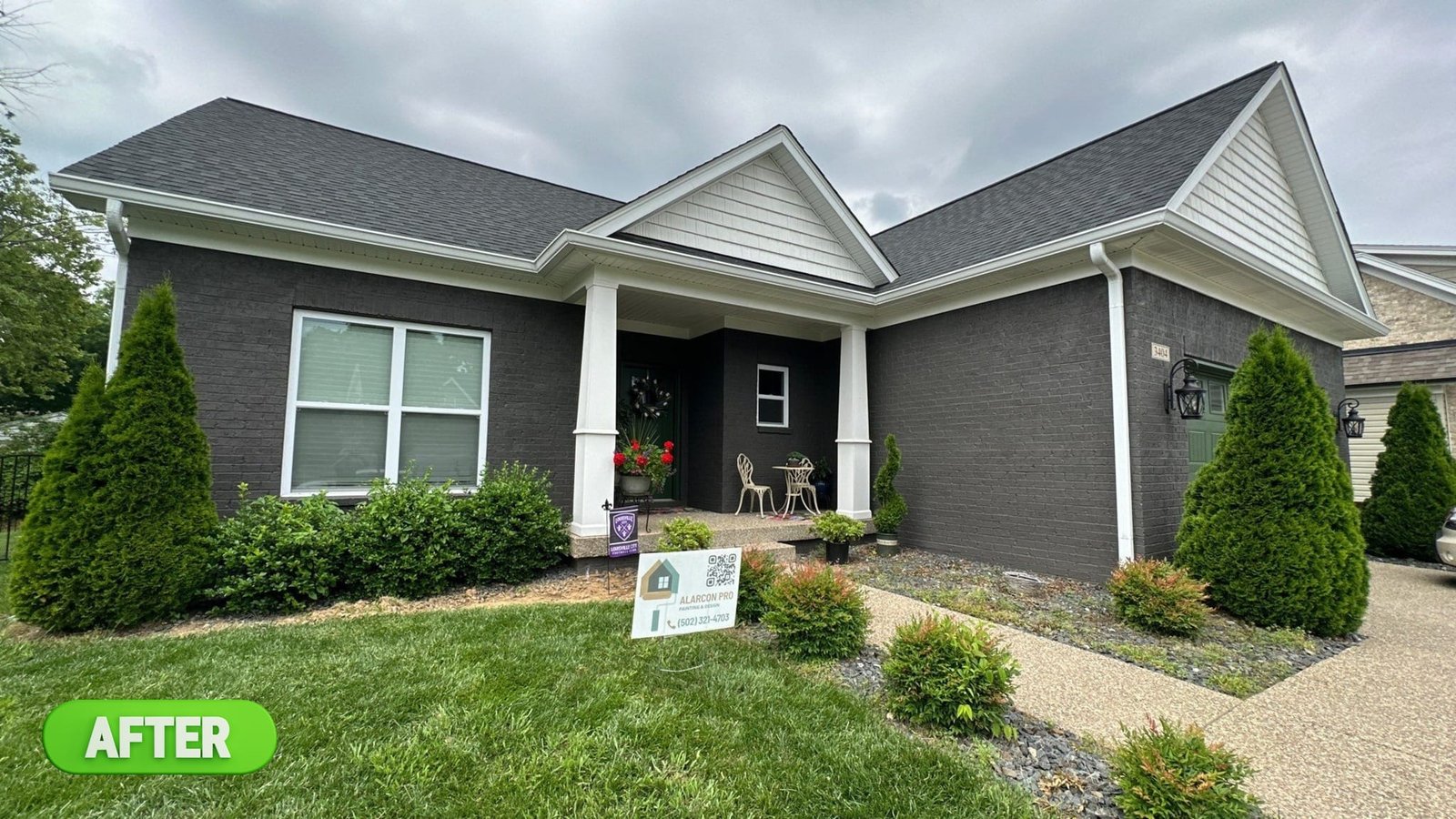
If you have lived in Louisville, KY, for any amount of time, you already know the weather has a personality. One week feels like spring, then a cold front rolls through, and suddenly your porch steps are damp again. That’s great for conversation at the coffee shop. It’s not so great for fresh exterior paint.
When homeowners ask us about the best time of year to paint exterior surfaces, they are usually hoping for a simple answer. The honest answer is that timing matters because Louisville’s seasons affect how paint sticks, how it dries, and how it cures.
Those three things are what decide whether your finish looks smooth and holds up, or starts acting up early with peeling, bubbling, or dull fading.
Best Time To Paint: A Month-By-Month Breakdown
Louisville’s weather can swing drastically between humid summers and icy winters. This section breaks down the year to help you make a smart seasonal choice.
- January to February: Too cold. Paint will not cure properly, and that’s when adhesion problems love to start
- March to April: Beginning to warm. You might get some workable days, but spring showers can show up fast
- May to June: Ideal conditions. Warm and dry stretches make it easier to get consistent curing, clean cut lines, and a finish that looks even across the whole house.
- July to August: Too humid and hot. High humidity can interfere with curing, and intense heat can dry paint too quickly on the surface
- September to October: Arguably the best window. Mild temps and lower humidity often give you that steady, reliable curing that makes exterior paint last longer.
- November to December: Risk of cold snaps. Some days will tempt you, but sudden temperature drops make this season unpredictable for exterior work.
Local Conditions In Louisville: What Makes It Unique?
Louisville’s climate has some quirks that every homeowner should consider. Here’s how local conditions impact exterior painting. We see these patterns all over the area, from the Highlands to St. Matthews, Crescent Hill, and out toward Jeffersontown and Middletown.
1. Humid Summers And Their Effect On Paint Adhesion
Louisville humidity is no joke. When the air is holding that much moisture, paint can stay tacky longer than you expect. That slows curing, and slow curing can create problems like soft films that grab dust, or coatings that never quite harden the way they should.
Another issue we run into in hot, humid stretches is moisture trying to escape from the home. If the surface is warm and the moisture underneath has nowhere to go, it can push against the paint film and cause blisters.
2. Spring Storms And Scheduling Challenges
Spring in Louisville is beautiful. It’s also unpredictable. You can have a sunny morning, then a storm line moves through, and now everything is damp again. Fresh paint and surprise rain do not mix.
The tricky part is that it’s not only about the rain you can see. It’s the lingering moisture after the storm. Siding, brick, and wood all hold moisture differently. If you paint too soon, you can trap that moisture, and trapped moisture usually shows up later as peeling or bubbling.
3. Fall’s Ideal Window For Exterior Jobs
If we had to pick one season where Louisville tends to cooperate most often, it’s fall. September and early October usually bring milder temperatures, less humidity, and fewer weather surprises. Paint levels nicely, cures consistently, and you get that clean, even look homeowners want.
Fall is also a great season for homes with mixed materials. When the weather is steady, it’s easier to get those materials to accept paint the right way, without fighting the environment.
4. Winter Freezes And Paint Curing Issues
Cold weather is where exterior paint really struggles. Most exterior coatings are not designed to cure properly when temperatures drop below 50°F. Sometimes the paint will feel dry to the touch, but curing is different. Curing is what gives you durability.
When a cold snap hits during curing, the film can lose adhesion. That leads to cracking and edge peeling later, and it can happen even if the job looked fine right after completion.
5. Urban Vs Suburban Microclimates In Louisville
One thing homeowners don’t always expect is how much microclimates matter. Dense areas can hold heat longer into the evening, while more open suburban spots can cool down faster. Within the same property, the north side might stay damp longer, while the south side takes intense afternoon sun.
This is why experienced painters plan by exposure, not just the calendar. We look at how your home sits, how trees shade it, where gutters drop water, and which walls get the harshest sun. That’s also why two neighbors can paint in the same month and get different results. Their homes may not be drying the same way.
How Professional Painters In Louisville Plan Their Projects
Professional painters do not pick dates based on guesswork. They plan around forecasts, surface conditions, and the reality of how Louisville weather behaves.
We also plan prep timing carefully. Washing, scraping, sanding, caulking, patching, and priming all need their own windows. If prep is rushed, the finish pays the price. That’s why many professionals prefer September and early October for exterior work. Conditions are more consistent, and quality contractors will not paint if temperatures are expected to drop below 50°F, even briefly.
At Alarcon Pro Painting and Design, we keep clients informed from the initial consultation to the final walkthrough. Your personal painting project portal makes it easy to see what’s next and why. Clear communication is how long-term relationships are built, and it also makes scheduling less stressful.
Frequently Asked Questions
Can I Paint My House Exterior In The Winter In Louisville?
Generally, no. Paint does not adhere well below 50°F, and curing is unreliable when nights dip into freezing temperatures. Even if a midday forecast looks decent, one cold night during the curing window can cause adhesion issues that show up later as cracking or peeling.
What Is The Best Exterior Paint Brand For Louisville Weather?
Sherwin-Williams and Behr are popular for their weather-resistant formulas. The best choice still depends on your surface type, how much sun the home gets, and the condition of the existing coating. A professional recommendation after a quick assessment will be more accurate than picking a brand name alone.
How Long Does Exterior Paint Take To Dry In Louisville’s Humidity?
It depends on the paint type and the conditions, but typically takes 4 to 6 hours to dry and 24 to 48 hours to fully cure. Humidity can stretch those timelines, which is why summer jobs often require extra planning and longer cure windows. For a practical overview of the temperature range for painting your house, it helps to think in terms of safe windows, not just a single forecasted high.
Should I Pressure Wash Before Painting?
Yes. Cleaning removes dirt, pollen, chalking, and mildew so paint bonds better and lays smoother. Pressure washing can also reveal failing paint edges, loose caulk, or repairs that need attention. The key is letting everything dry completely before any primer or paint goes on. This guide on how to pressure wash your house before painting breaks down the safest approach.
How Much Does It Cost To Paint A House Exterior In Louisville?
Average cost ranges from $3,000 to $6,000, depending on the size of the home, surface condition, prep needs, repairs, and trim complexity. The most accurate way to price it is with an on-site estimate so nothing gets missed.
If you want a plan that fits Louisville weather and a finish you can trust, reach out to Alarcon Pro Painting and Design for an exterior painting consultation or estimate. We’re fully licensed and insured. We treat your home with genuine care, and we keep the process clear with a personal painting project. Visit us at 1860 Mellwood Avenue, Suite 117, Louisville, KY 40206, and let’s choose the best time of year to paint exterior surfaces.