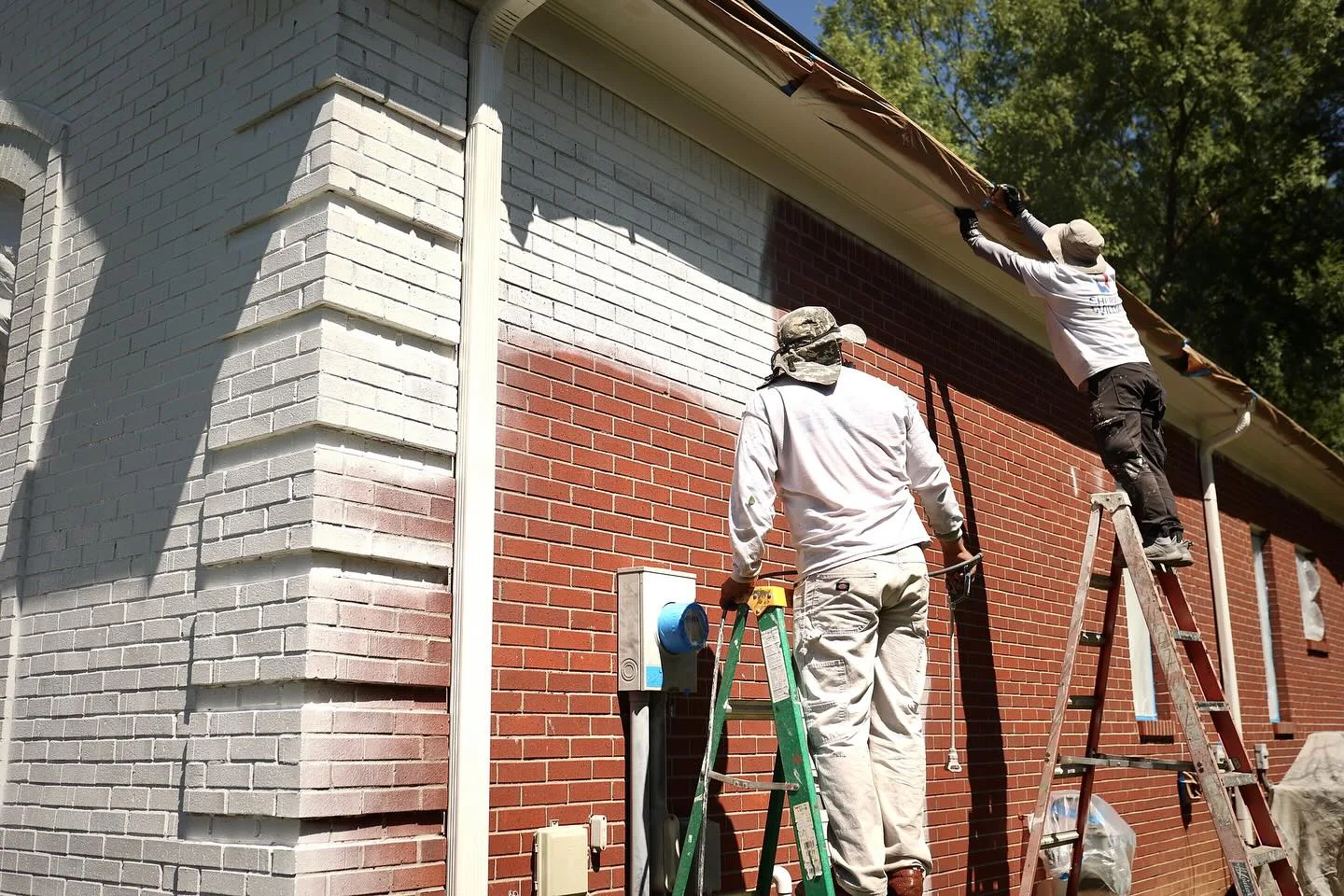

Type “painted brick” into any search bar and the warnings pour in. It peels. It traps moisture. It ruins the brick forever. No wonder so many homeowners stall on the decision for years.
Here’s the truth. Most painted brick problems trace back to two things: the wrong products and poor prep. The paint itself was never the villain. Once you understand the real painting brick house risks, you can make an informed decision instead of a fearful one.
“The stakes of getting these projects right keep climbing: Americans spent an estimated $603 billion on home remodeling projects in 2024 – which means a lot of money riding on doing the job correctly the first time.”
— National Association of Realtors, 2025 Remodeling Impact Report
Let’s take the five biggest fears one at a time.
[The five biggest painted-brick fears, and what’s actually true about each one.]
Fear #1: Will Painted Brick Peel or Flake?
It can — but only when something went wrong underneath. Standard wall paint forms a plastic-like film. Brick is porous, full of tiny holes that absorb and release moisture with the seasons. Seal those small openings with the wrong product, and pressure builds behind the film. A few years later, the paint job starts peeling in sheets.
The fix is simple. Use the right paint: a breathable masonry paint made for brick surfaces. These products let vapor pass through while still shedding rain. Applied correctly over clean, sound brickwork, they hold on for decades, not seasons.
So no, peeling isn’t the price of painting. It’s the price of cheap acrylic on a surface it was never made for.
Fear #2: Will Paint Trap Moisture in My Brick Wall?
This is the fear with the most truth behind it, so let’s give it respect. Brick walls manage water constantly. Rain soaks in, then evaporates back out. Many homes also have weep holes — small gaps near the base of the brickwork that release moisture from behind the wall.
Trapped moisture is what happens when a non-breathable coating blocks that cycle. Water gets trapped inside the brick and the mortar joints. In freezing weather, it expands. That can lead to cracks, crumbling faces, and in bad cases real structural damage.
“This isn’t contractor folklore – it’s documented building science. The U.S. National Park Service’s technical guidance on masonry warns that inappropriate coating treatments are a major cause of damage to masonry buildings, because coatings that restrict moisture flow can cause the brick surface to spall.”
— U.S. National Park Service, Preservation Brief 1
Notice what causes the problem, though: a coating that can’t breathe, or paint slopped over the weep holes. Proper masonry paint preserves the brick’s ability to release moisture. A careful painter keeps weep holes clear. Do both, and you prevent moisture buildup instead of inviting it.
[How one wrong product choice sets off the chain reaction every homeowner fears.]
Fear #3: Will Painting Ruin My Brick House Forever?
Honesty first: painting is close to a one-way street. Removing paint from brick is slow, costly, and rarely returns the wall to perfect bare brick. If you treasure the natural charm of exposed brick, think hard before you cover it.
But “permanent” is not the same as “ruined.” Done right, paint protects the existing brick from stains and harsh weather conditions. The brick’s texture still shows through. Many owners find their home’s appearance improves so much that they never miss the natural brick at all.
The real risk isn’t permanence. It’s a botched job you’ll live with permanently. That’s why the prep and the products matter more than the paint color you pick.
Fear #4: Do I Really Need a Special Primer, or Is That a Myth?
If a builder told you brick needs primer, believe them. It’s not upselling. It’s not a myth. A masonry primer is non negotiable.
Brick and mortar are alkaline and thirsty. Without primer, the first coat soaks in unevenly and bonds poorly. Primer seals the surface just enough, evens out absorption, and gives the topcoat something to grip. Skipping it is one of the most common exterior brick painting mistakes — and one of the easiest to avoid.
Fear #5: “I Heard Painted Brick Is Just Bad”
That reputation is real, but it was earned the hard way. Painting brick surfaces looks easy, so people grab a roller and whatever paint is on sale. Cheap contractors do the same thing at scale. The failures end up on every block, and the whole idea takes the blame.
Most painted brick problems come from a short list:
- Wrong products. Standard acrylic instead of masonry-specific paint.
- Cheap paint. Bargain formulas that can’t breathe.
- Poor prep. No cleaning, no repairs, skipping the primer.
- Incorrect application. Coats rolled on too thick, or with the wrong technique.
- The wrong crew. Contractors unfamiliar with masonry systems.
“Say it plainly: there is no such thing as a painted brick problem – only a wrong-product problem and a lazy-prep problem. Every horror story on your street is a cheap-shortcut story wearing a paint costume.”
Not one of those is “painting itself.” A professional painter who knows masonry sidesteps all five.
What a Proper Brick Painting Project Looks Like
Good outcomes follow the same steps every time:
- Clean. Gentle power washing to remove dirt, mildew, and old stains. Then let the brick dry completely — often several days.
- Repair. Patch cracks and failing mortar joints before any paint goes on.
- Prime. Masonry primer across the full wall.
- Paint. Two thin coats of breathable masonry paint, applied in mild weather.
Surprising fact
“Most people would never guess this: a common clay brick can soak up roughly a fifth of its own weight in water – it’s basically a hard sponge. That’s exactly why pros wait days after washing a wall before they prime it, and why rushing that drying step quietly sabotages the whole job.”
Quality products from brands like Sherwin Williams cost more per gallon. They also significantly reduce the odds you’ll repaint early. With proper materials and patient prep, a painted exterior needs only ongoing maintenance — a wash now and then, and a fresh coat down the road.
A Popular Alternative: Brick Stain
Still nervous? Brick stain is a popular alternative worth knowing about. Instead of forming a film, stain soaks into the brick and tints it. The surface keeps its texture and its full ability to breathe.
There are potential drawbacks. Stain offers fewer color options, works best on unpainted brick, and won’t hide patched or mismatched walls the way paint does. But for owners who want a refreshed classic look with less risk, it’s one of the better alternative methods out there.
[Paint or stain? How the two options stack up for a brick exterior.]
The Payoff: Curb Appeal, New Life, and a Home That Stands Out
Handled well, paint gives a tired brick home new life. A unified color can improve curb appeal overnight, make your front door pop, and help your home stand out on the street. Buyers respond to that, which is why a smart exterior update often supports resale value too.
Every brick house has unique characteristics — its age, its mortar, its exposure to weather. Respect them, and paint is durable protection with serious aesthetic appeal. Ignore them, and you join the cautionary tales. The potential damage everyone fears is optional.
[Every painted-brick failure traces back to one of these five culprits – and all five are avoidable.]
Worried About Your Home’s Exterior? Talk to Alarcon Pro
The natural beauty of brick deserves a careful hand, whether you choose paint, stain, or leaving it alone. Alarcon Pro helps homeowners weigh the options honestly — and when painting is the right call, we use the masonry-grade products and prep that keep painted surfaces looking sharp for years.
“As a family-owned and immigrant-owned business, we take pride in serving our community with integrity and care.”
— Alarcon Pro Painting, whose Louisville roots run from founder Bryan Alarcón’s first job sites at 16 to a 1-year workmanship warranty on every project today.
Call 502-321-4703 or email bryan@alarconpro.com for a free assessment of your home’s exterior. No pressure, just straight answers.