



Most homes should have their main living areas repainted every 4 to 5 years, even though a quality interior paint job can last 5 to 10 years. Repainting at the 4–5 year mark catches scuffs, fading and worn sheen while the walls still need only light prep, so the job stays simpler and the finish looks fresh.
Kitchens, hallways and kids’ rooms often need it sooner; low-use bedrooms and ceilings can usually wait longer. Peeling, cracking or water stains mean it’s time now, whatever the date, and the cause should be found before painting.
Below, four rooms from our own jobs show how that timing shifts from room to room, followed by the signs that mean “now.”
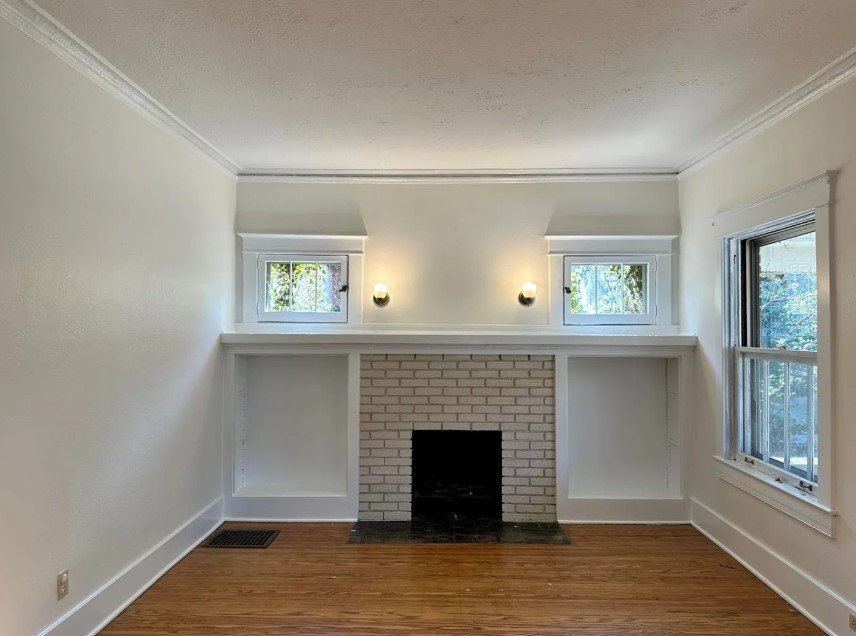
- A living room we repainted in a Louisville neighborhood Photo: Alarcon Pro Painting.

When to Repaint House Interior vs. How Long Paint Lasts
As our 2026 interior guide explains, a quality interior paint job lasts 5 to 10 years. That’s when paint fails, not when it stops looking good. In main rooms, the second happens first:
- Years 1–3: fresh. Touch-ups with leftover paint still blend in.
- Years 4–5: worn but easy. Scuffs, fading and shiny spots show, yet light patching and two coats bring the room back.
- Years 6–10+: overdue. Dings pile up, stains need blocking primer, and prep time grows.
Waiting doesn’t damage anything; it moves time from painting into prep.
| From our job records | Result |
|---|---|
| Interior repaints completed | 529 |
| Typical years since last paint | 3-4 years |
| Top reason homeowners call | paint fading, chipping or peeling |
Based on our job records from the last 24–36 months. Treat 4–5 years as a check-in, not an automatic whole-house repaint; often only the busy rooms are due.
How Often to Repaint House Interior, Room by Room
Main living and dining rooms are due about every 4 to 5 years. Hallways and entries often need it every 2 to 4 years, and kitchens, bathrooms and kids’ rooms every 3 to 5. Adult bedrooms can go 5 to 7 years or more, and most ceilings 10 or longer.
| Room | Repaint window | What wears it out |
|---|---|---|
| Hallways, stairs, entries | 2–4 years | Hands, bags, pets |
| Kitchens, bathrooms | 3–5 years | Grease, steam, humidity |
| Kids’ rooms, playrooms | 3–5 years | Marks, scrubbing |
| Living, dining rooms | 4–5 years | Sun, daily traffic |
| Bedrooms, offices | 5–7+ years | Sun, style changes |
Trim and doors need touch-ups every 2 to 3 years and a repaint every 4 to 6.
Here’s how that plays out in four rooms we’ve painted. More are in our project gallery.
Entry halls and stairs: first to show wear
Hands, bags and doors wear entry paint faster than most rooms. This entry in St. Matthews hadn’t been painted in about nine years. We painted the walls, trim, front door, closet doors and handrail.
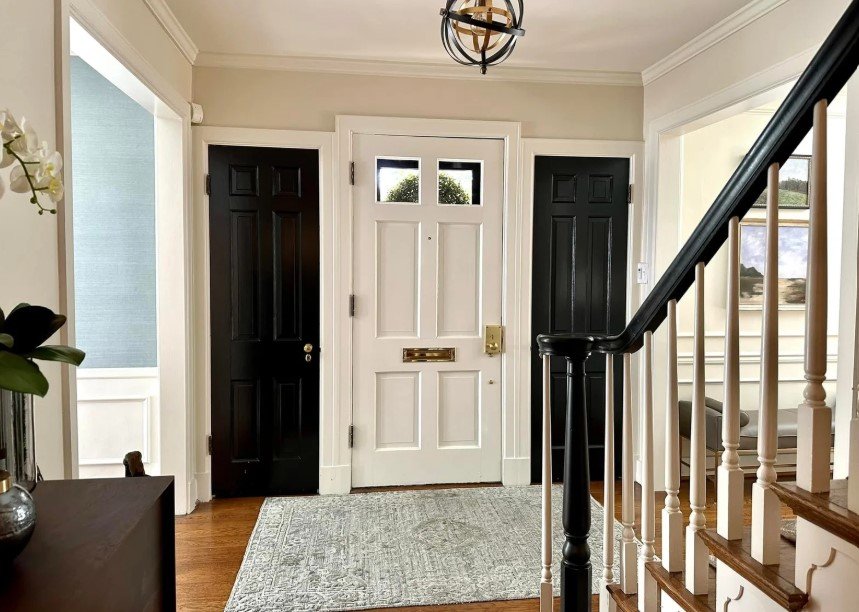
- An entry and stair hall, where hands, bags and door swings wear paint fast. Photo: Alarcon Pro Painting.
Kitchens: grease, steam and the cabinet question
Grease, steam and constant wiping dull kitchen paint within 3 to 5 years. In this kitchen, the walls, ceiling and original oak cabinets were all due, about seven years after the last paint job. Homeowners often weigh kitchen cabinet painting at the same time. Here the homeowner chose two-tone gray, with darker uppers and lighter lowers.
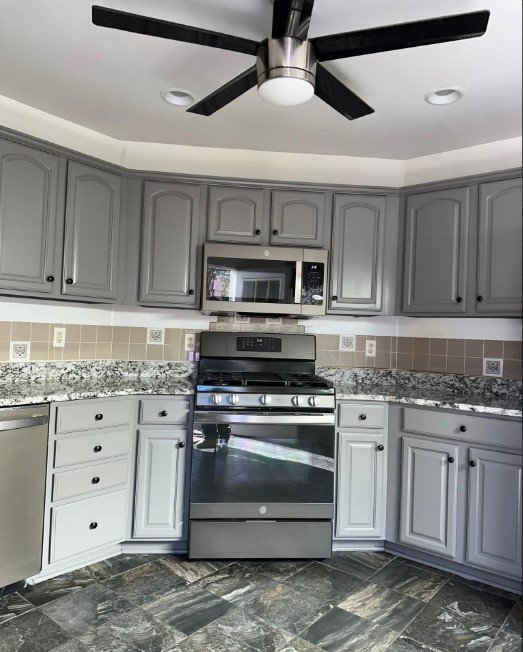
- Two-tone gray kitchen cabinets with lighter lowers and darker uppers. Photo Alarcon Pro Painting

Living rooms: the 4–5 year benchmark
The living room at the top of this post is what our 4–5 year advice is built around: traffic and sun, but no grease or steam. It had been about six years since the last paint job, and the crew found hairline plaster cracks at the corners, sun-faded walls beside the windows, scuffed baseboards and yellowed trim on the built-ins.
Prep included patching and sanding the cracks, caulking open trim joints, and spot-priming repairs before painting the walls in Benjamin Moore Regal Select eggshell, the ceiling in Benjamin Moore Waterborne Ceiling Paint flat, and the trim, built-ins and mantel in Benjamin Moore Advance semi-gloss, with the crew on site for three days.
Bedrooms: the room that can wait
Adult bedrooms see little traffic, so they often go 5 to 7 years or more, and a color change is a common reason to repaint. This one was prompted by the homeowner wanting to move away from the original beige walls about eight years after the last paint job, and the navy accent wall behind the bed was painted in Benjamin Moore Aura in matte, which holds deep colors evenly and resists the burnishing and touch-up marks that dark walls tend to show.
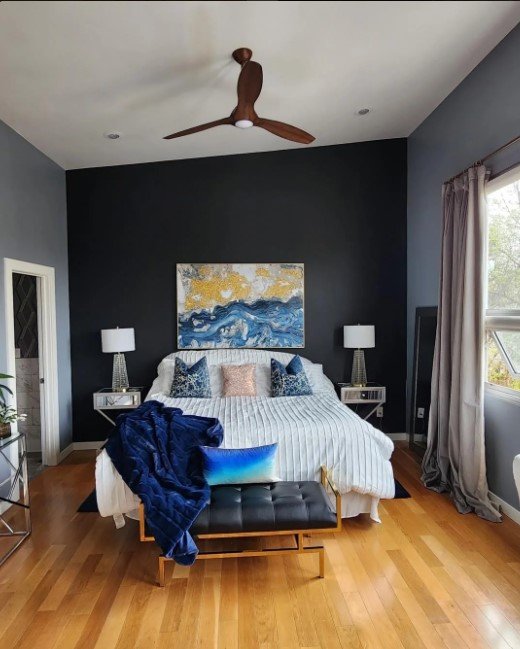
- A navy accent wall we painted. Photo: Alarcon Pro Painting.

8 Signs It’s Time to Repaint Interior Walls
Whatever the calendar says, these mean a room is ready:
- Marks that won’t wash off without taking paint or sheen with them.
- Shiny or dull patches near switches and doorways, where hands burnish the finish.
- Uneven color, because sunny walls fade first.
- Touch-ups that show. After a few years, color and sheen shift, so fresh touch-ups “flash.” Repainting the full wall, corner to corner, fixes it.
- Hairline cracks in caulk, inside corners and drywall seams.
- Peeling, flaking or bubbling, which usually points to a deeper cause (next section).
- Water, smoke or grease stains bleeding through.
- A dated color or a sale coming up.
When Paint Isn’t the Fix
Some problems return through new paint unless the cause is fixed first.
- Bathroom peeling or bubbling usually means moisture. Improve ventilation and let the surface dry before repainting.
- Ceiling water stains mean a leak. A roofer or plumber should fix it before the stain is sealed and painted.
- Mildew needs cleaning and drying first. If it keeps returning or covers a large area, call a mold remediation professional.
- Wide, diagonal or returning cracks can signal movement. Have the right professional assess them first.
Louisville Conditions That Shorten (or Stretch) the Cycle
Humid summers are hard on bathrooms, kitchens and basements. Seasonal swings and dry winter heat can open caulk gaps at trim. Many older homes around here have plaster walls and old paint layers.
Safety note: homes built before 1978 may have lead-based paint. Don’t dry-sand, scrape or heat old paint until it has been tested, and hire a lead-safe certified contractor for work that disturbs it. Popcorn ceilings from before the 1980s may contain asbestos, so test before disturbing them.
Making Each Paint Job Last Longer
A washable eggshell or satin finish holds up best in busy rooms. Clean with a soft cloth and mild soap, since abrasive pads burnish paint. Label leftover paint and run bathroom and range-hood fans.
FAQs
How often should I repaint my home’s interior?
Every 4 to 5 years for main rooms, sooner for hallways, kitchens and kids’ rooms, and later for bedrooms and ceilings.
Is it bad to wait 10 years to repaint?
It isn’t harmful on its own, but expect more patching and priming. Peeling, stains or cracks should be checked sooner.
Can I just touch up instead of repainting?
In the first few years, yes. After that, color and sheen shift, so repainting the full wall looks better.
Should I repaint before selling my house?
Repaint scuffed or dated rooms in neutral colors so the house photographs well.
How often do ceilings need repainting?
Usually every 10 years or more, unless they’re in a kitchen or bath or have stains.
What’s the best time of year to paint inside in Louisville?
Any season works for interior paint, as long as rooms stay ventilated while it dries.
Ready for a Second Opinion on Your Walls?
If your walls are near that 4–5 year mark, we’ll walk your home with you and tell you which rooms are due and which can wait. Start with a free estimate.

